

Earth observation for agriculture🌱 requires more than satellites
- Post by: Sabrina Lodadio
- June 4, 2026
Jean Bouchat, Dr, Internal Research Fellow @ Esrin Science Hub,
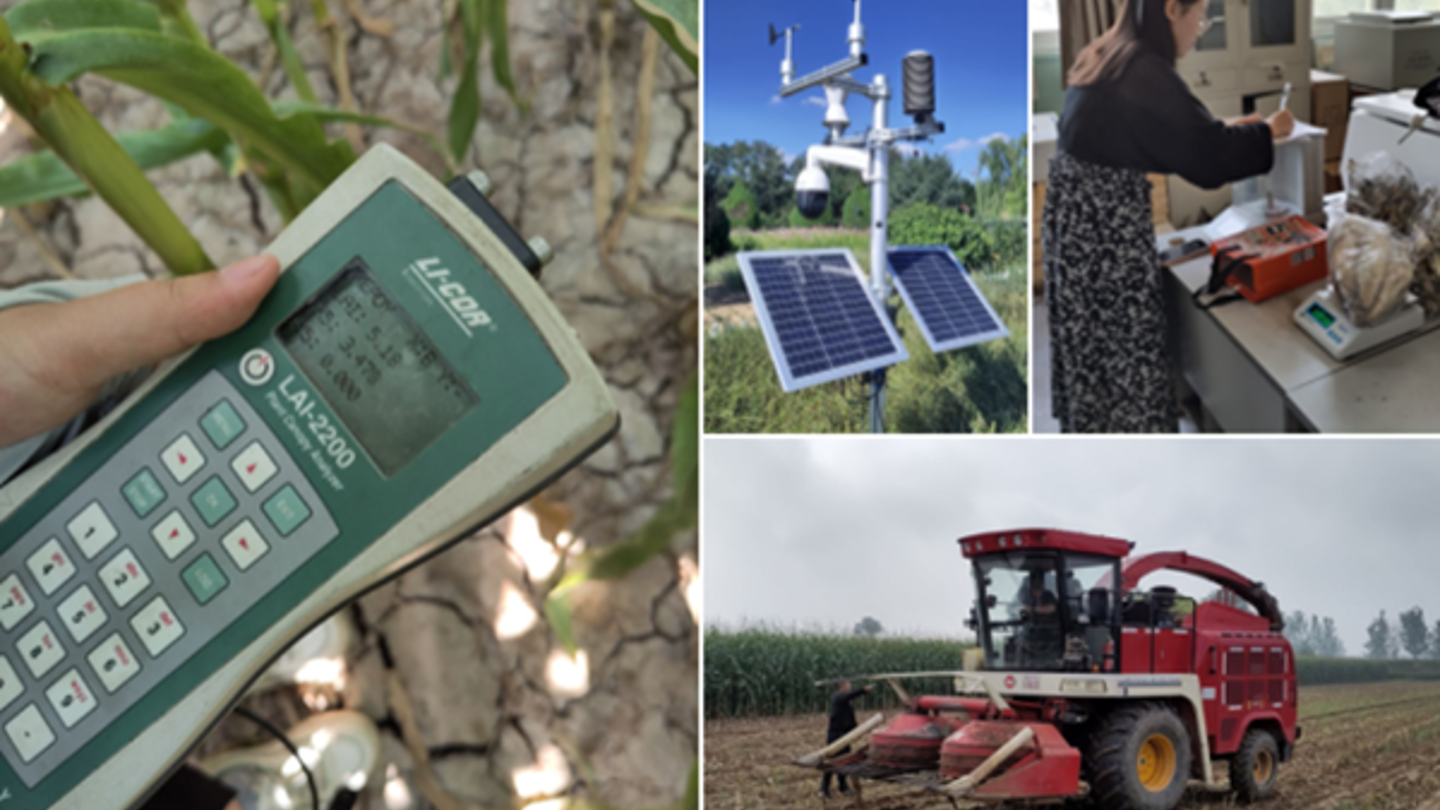
Researchers at ESA’s Science Hub and their colleagues have recently published a Perspective paper in Environmental Research Letters on the in situ data bottleneck in Earth observation for agriculture. The article examines why field observations remain difficult to obtain, access, and reuse, and argues that better data sharing is one of the most immediately actionable ways to improve the availability of agricultural in situ data.
Earth observation has transformed agricultural monitoring through open satellite missions, increasing computing capacity, and increasingly sophisticated models. Yet these advances still depend on agricultural in situ data: field observations and measurements used to calibrate, train, and validate remote sensing products. These data remain a major bottleneck because they are often scarce, heterogeneous, and difficult to access.
The article argues that improving data sharing is the most immediately actionable way to increase the availability and reuse of agricultural in situ data. Continued investment in field campaigns and better standardization remain necessary, but existing datasets already represent a valuable and underused resource. Making them more accessible could rapidly improve model development, comparison, transferability, and reproducibility in agricultural Earth observation.
However, sharing agricultural in situ data is not straightforward. Field data are costly and difficult to collect, especially because agricultural systems are highly heterogeneous and dynamic. Crop varieties, management practices, soil properties, weather conditions, and crop development stages vary across space and time, requiring repeated and spatially dense measurements. This difficulty helps explain why researchers may hesitate to share datasets that required substantial effort to produce.
Other barriers further limit sharing. Agricultural data can be sensitive because they may reveal information about yields, production capacity, farm boundaries, land ownership, or management practices. Legal uncertainty, unclear data ownership, restrictive contracts, and limited standards for anonymization or controlled access can make researchers, institutions, companies, and data providers reluctant to make data openly available.
Researchers also face practical and cultural obstacles. Preparing data for reuse requires cleaning, documentation, metadata, licensing, and repository deposition, yet this work is rarely rewarded in careers, grants, or journal metrics. Researchers may also fear misuse, misinterpretation, criticism, or being scooped.
The Perspective concludes that addressing the bottleneck requires coordinated action. Funders, journals, institutions, and researchers should support FAIR and, ideally, open data practices, recognize data stewardship, develop trusted repositories and controlled-access mechanisms, and create incentives that make responsible sharing easier and more rewarding.
Link to the article 👉 https://doi.org/10.1088/1748-9326/ae6e57