

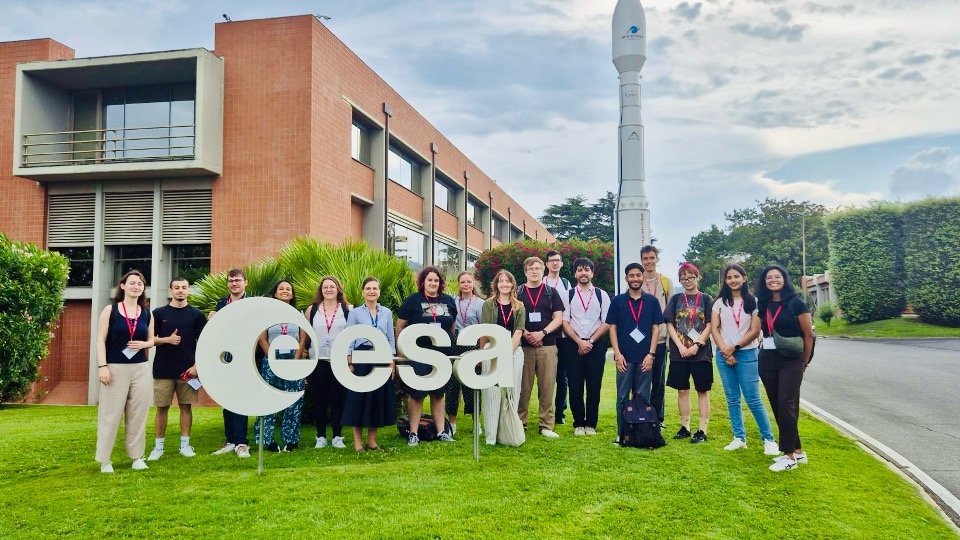
Universities Selected for the 2026 ESA Science Hub Challenges
- Post by: Science Hub Team
- March 13, 2026
ESA has selected the universities that will participate in the 2026 edition of the Science Hub Challenges, following a highly competitive call for proposals that attracted strong applications from across Europe.
The ESA Science Hub has completed the selection of universities for the 2026 Science Hub Challenges, an initiative that engages university students in addressing cutting-edge Earth science questions using satellite observations and modern data analysis methods.
The call for participation generated many high-quality applications, highlighting the strong interest from the academic community to collaborate with ESA scientists and work with advanced Earth Observation data.
The selected universities will participate in two workshops in 2026, where interdisciplinary student teams will work together with ESA researchers on targeted scientific challenges.
Workshop #1 – Urban Environments and Atmospheric Extremes
14–18 September 2026
Participating universities:
This first workshop will address scientific challenges related to land use and land cover change (LULC), urban air pollution, and extreme heat in cities. One team may also explore a topic related to space weather and its potential impacts.
Workshop #2 – Vegetation under Climate Extremes
16–20 November 2026
Participating universities:
This workshop will focus on vegetation dynamics under extreme environmental conditions, with particular attention to new scientific opportunities opened by ESA’s BIOMASS Earth Explorer mission. Students will explore how radar observations can improve our understanding of forest structure, carbon stocks, and ecosystem responses to climate extremes.
Training the Next Generation in FAIR and Open Science
A key component of the Science Hub Challenges is the promotion of FAIR (Findable, Accessible, Interoperable, Reusable) scientific practices.
During the workshops, participating students will receive training from the ESA EarthCODE team on open and reproducible research workflows, ensuring that the scientific outputs developed during the challenges can be shared and reused by the wider scientific community. This includes working with modern data formats, collaborative analysis environments, and FAIR data management practices.
Next Call for Participation
The next call for participation for universities will be published in Q3 2026. Universities interested in collaborating with ESA through future Science Hub Challenges are encouraged to follow updates on the ESA Science Hub website.
Through this initiative, ESA continues to foster collaboration with universities while supporting the next generation of scientists working with Earth Observation data, novel EO processing tooling and technieus, emerging mission datasets and open science approaches.