


Media Workshop participants explore cutting-edge Earth Observation research at the ESA Science Hub
- Post by: Science Hub Team
- June 28, 2026
As part of the 2026 Media Workshop of the Forum International de la Météo et du Climat, hosted at ESA’s ESRIN establishment in Frascati, participants had the opportunity to visit the ESA Science Hub and engage directly with researchers developing innovative applications of Earth Observation fpr Earth System Science. Alongside the visit, Science Hub researchers also contributed to the workshop programme through scientific presentations and discussions.
The workshop brought together journalists, scientists and communication experts to explore how satellite data, artificial intelligence and scientific communication can support climate adaptation and resilience.
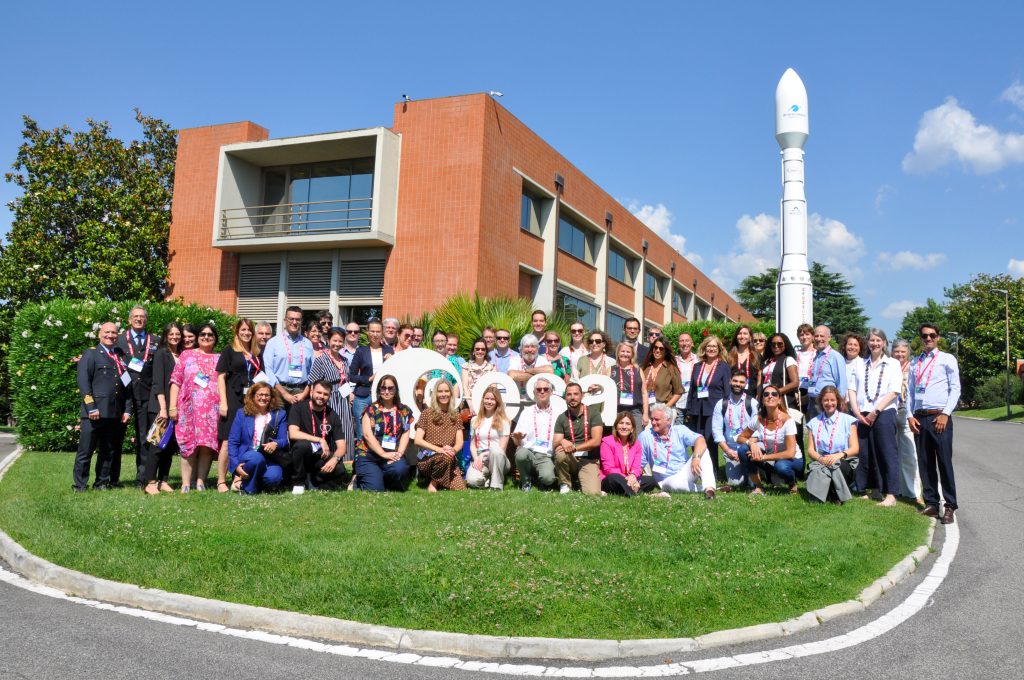
During their visit to the Science Hub, participants met researchers who showcased a range of ongoing scientific activities addressing some of today’s most pressing environmental challenges.
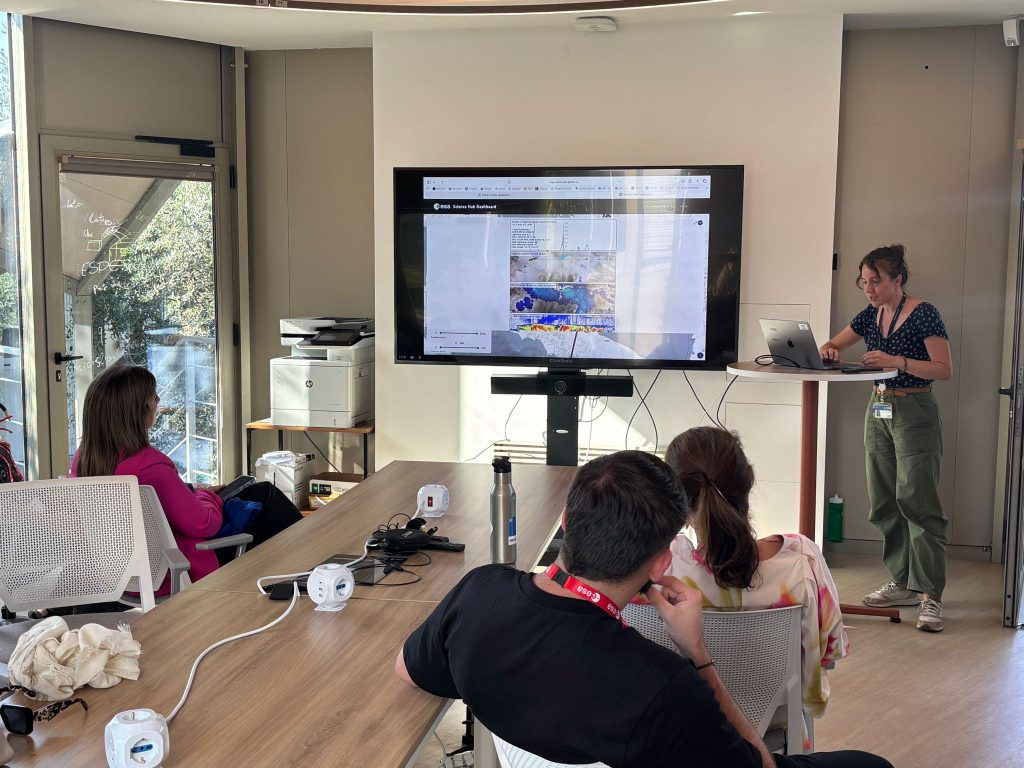
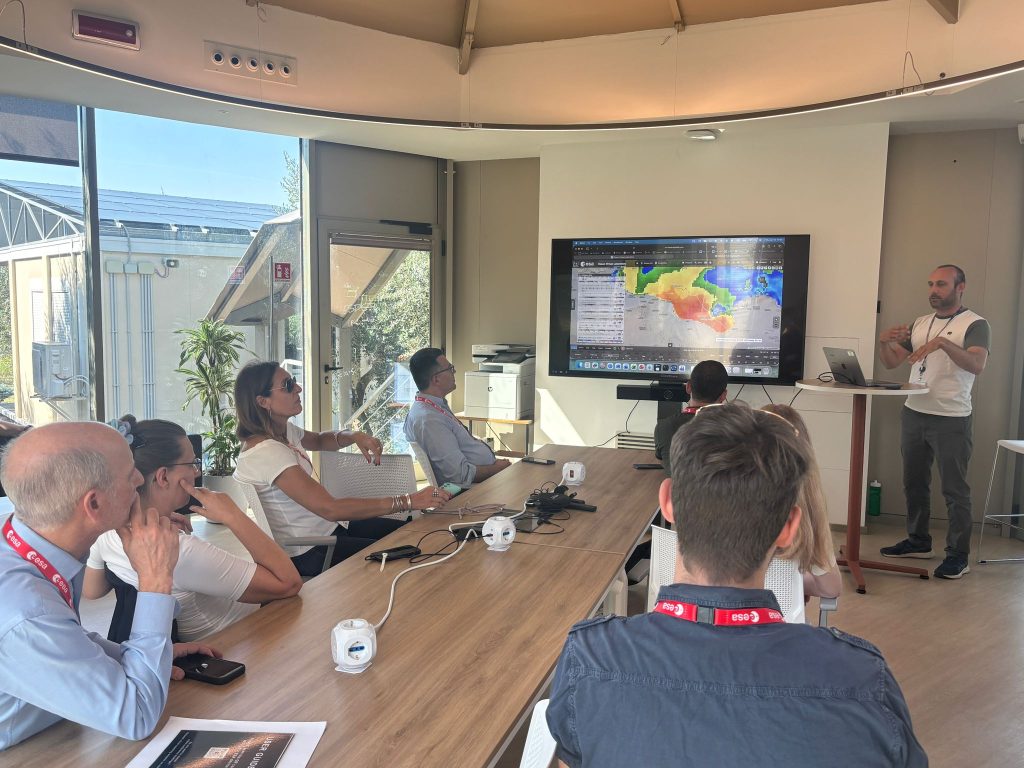
One demonstration by Arthur Avenas highlighted the Ocean Virtual Laboratory, illustrating how Earth Observation data help scientists monitor and better understand extreme storms, including hurricanes and Mediterranean tropical-like cyclones. By combining multiple satellite observations into interactive visualisations, researchers can study storm evolution in unprecedented detail.
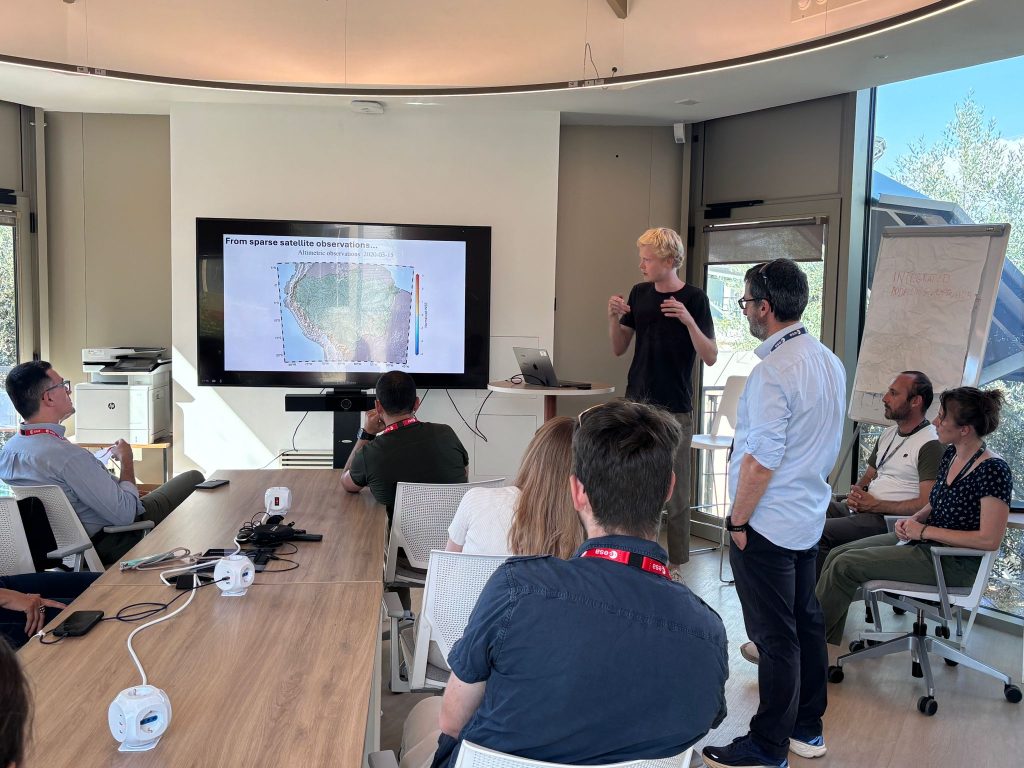
Participants also learned from Karim Douch and Ruben Cartuyvels how artificial intelligence can be combined with satellite altimetry to densify water surface elevation measurements, improving the spatial coverage of observations and opening new opportunities for monitoring inland and coastal waters.
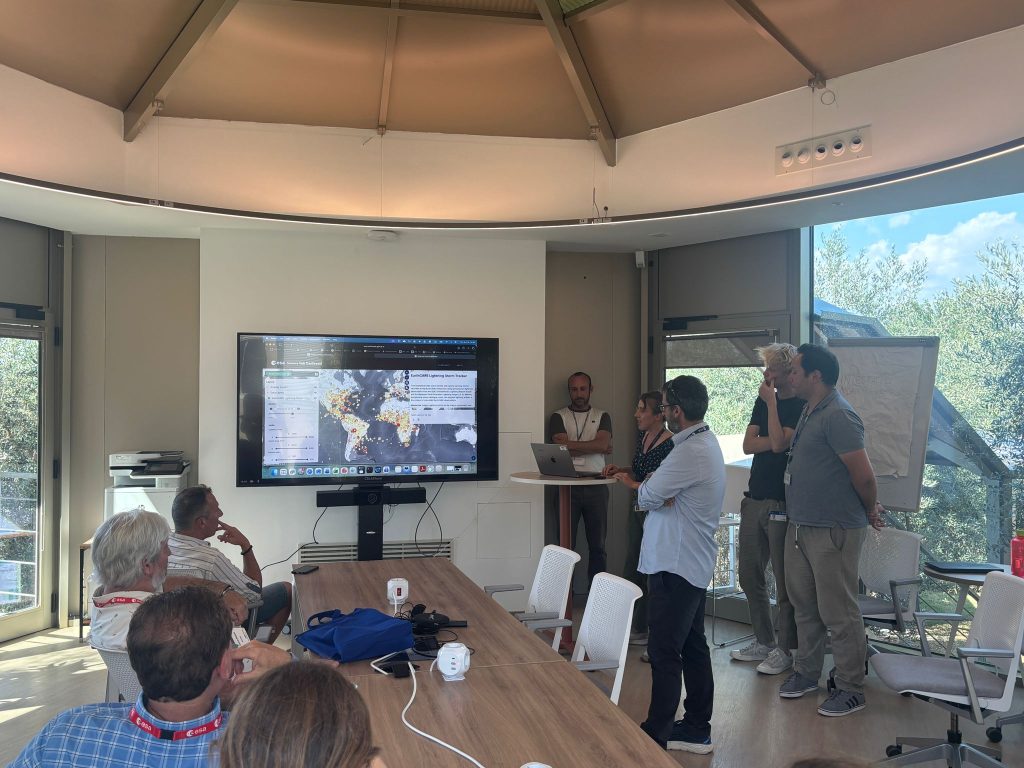
Another presentation by Blanka Piskala showcased the scientific potential of EarthCARE observations for improving our understanding of lightning activity. By combining EarthCARE’s unique atmospheric measurements with lightning observations, researchers are gaining new insights into cloud processes and severe weather.
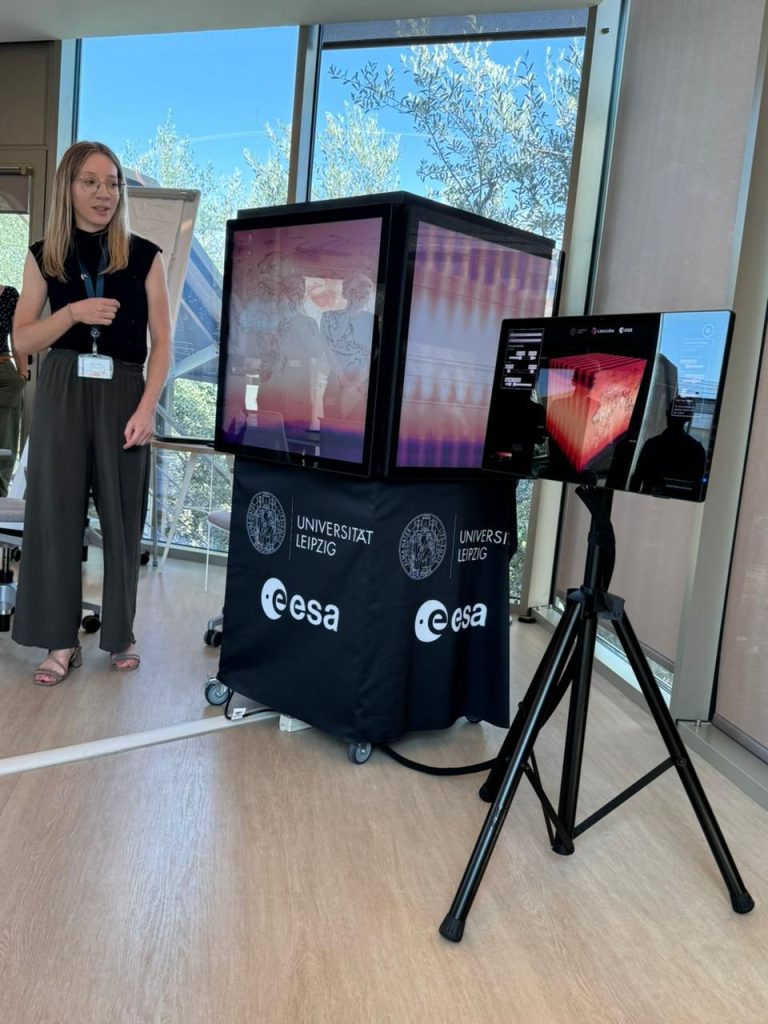
The visit also featured LEXCUBE, presented by Ewelina Dobrowolska, an innovative Earth data exploration tool developed by the University of Leipzig, that enables scientists to interact with large multidimensional datasets in entirely new ways. By making complex Earth Observation data more intuitive to explore, tools such as LEXCUBE are helping accelerate scientific discovery and collaboration.
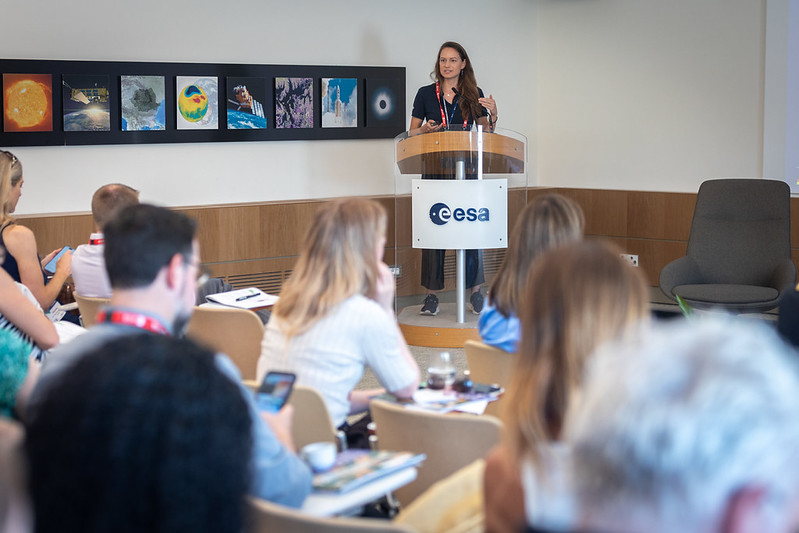
In addition to the Science Hub visit, Johanna Meyer, researcher in atmospheric science at the ESA Science Hub, gave a keynote in the workshop’s plenary sessions, where she presented “A New View of Clouds: Insights from EarthCARE and AI“, highlighting how new ESA Earth Explorers missions such as EarthCARE contribute to climate research and societal resilience.
The visit offered participants a glimpse into how the ESA Science Hub connects cutting-edge research, advanced data analytics and innovative visualisation technologies to transform satellite observations into scientific knowledge that supports climate research and informed decision-making.
Learn more about the media workshop event: